Inside Our Group: Research Directions, Methods, and Student Training
Our research is guided by a question that connects quantum optics, open systems, and quantum energy science: When light, matter, and the environment enter strong-coupling or nonequilibrium regimes, how are energy, information, and entanglement reorganized, and can these effects be harnessed for quantum-state preparation and energy control?
To address these questions, we combine analytical derivations, numerical calculations, and clear physical pictures. Our goal is not merely to obtain a spectrum, a numerical plot, or a set of parameter values, but to understand why a result appears, under what conditions it remains valid, and how it connects to other quantum systems.
Four Interconnected Research Themes
1. Quantum Rabi Models and Ultrastrong Light-Matter Interaction
The quantum Rabi model provides a compact description of the interaction between a two-level system and a single-mode field. In the strong- and ultrastrong-coupling regimes, however, it exhibits rich structures such as hidden symmetries, level crossings, geometric phases, and nontrivial dynamics. We develop exact and approximate analytical methods and extend them to asymmetric, anisotropic, multiqubit, and open-system settings.
Learn more: Ultrastrong Light-Matter Coupling
2. Open Quantum Systems and Non-Hermitian Dynamics
Real quantum systems can never be completely isolated from their environments. Relaxation, dissipation, noise, and measurement can destroy coherence, but they can also generate new steady states, dynamical phase transitions, and characteristic timescales. We study PT symmetry, exceptional points, Liouvillian spectra, and the interplay between gain, loss, and quantum coherence, with the aim of understanding when the environment acts as a disturbance and when it can become a useful resource for control.
Learn more: Non-Hermitian Physics and Open Quantum Systems
3. Quantum Entanglement, Quantum Chaos, and State Preparation
In many-body and multiqubit systems, entanglement is not distributed uniformly across the spectrum. Symmetries, avoided crossings, and dynamical pathways determine which states can be prepared efficiently and which entanglement structures remain robust against parameter errors. By combining spectral analysis, entanglement measures, and finite-time dynamics, we investigate how static spectral structures can guide the design of quantum-state-preparation protocols.
Learn more: Quantum Chaos and Entanglement Dynamics
4. Quantum Batteries and Quantum Thermodynamics
Quantum thermodynamics examines how energy, work, and heat are transformed in microscopic quantum systems, and how coherence, entanglement, and open-system dynamics affect these processes. Quantum batteries provide a concrete setting for exploring these questions: beyond stored energy, one must also consider charging power, extractable work, stability, and the effects of dissipation. We study how ultrastrong light-matter coupling, topological edge states, and open-system pumping modify charging dynamics, while distinguishing genuine quantum advantages from improvements caused simply by additional external input.
How We Conduct Research
We usually begin with a model that is compact enough to isolate the essential physics while remaining rich enough to address a meaningful question. We move repeatedly between analytical understanding and numerical verification. A typical project involves:
- identifying an open question in the literature and stating the assumptions and regime of validity of the model;
- searching for symmetries, conserved quantities, effective models, or controlled limiting approximations;
- testing analytical results through numerical diagonalization, time evolution, and parameter sweeps;
- checking limiting cases, dimensional consistency, numerical convergence, and parameter sensitivity;
- organizing the results into a physical picture that can be clearly explained, reproduced, and tested.
For us, numerical calculations and analytical derivations are not separate tracks. Computation can expose problems in a derivation, while analytical structure tells us what a numerical figure actually means.
How Students Get Involved
We welcome undergraduate and graduate students who are interested in quantum optics, theoretical analysis, or numerical computation. Undergraduates are also encouraged to join the group for sustained research training. Most undergraduate members of the group have either led a research project or contributed to work that resulted in a publication. Some begin by reproducing results from the literature and implementing numerical calculations before gradually taking responsibility for an independent subproject. Others contribute to model analysis, result verification, figure preparation, and scientific writing, ultimately helping develop the work into a publishable study.
Students are not expected to have mastered every method before joining a project. They should, however, be willing to read, derive, program, and repeatedly check their own results.
Student projects typically progress through three stages:
- Read foundational literature and reproduce a known derivation, figure, or benchmark result.
- Work on a clearly defined subproblem and complete its modeling, calculation, and cross-validation.
- Organize individual results into a coherent physical story and communicate it through presentations, figures, and papers.
Throughout this process, we value solid foundations and verifiable calculations, as well as the ability to explain a result clearly in one’s own words.
Discussion and Collaboration
We welcome discussions and collaborations in quantum optics, open quantum systems, non-Hermitian physics, quantum entanglement, and quantum energy science. You can also learn more about our group members, publications, and contact information.
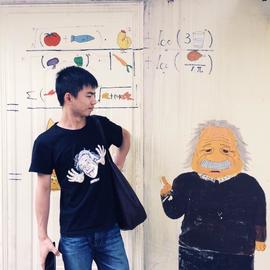
Zi-Min Li
Associate Professor and Master’s Supervisor
My research spans ultrastrong light-matter coupling, non-Hermitian physics and open quantum systems, quantum chaos and entanglement dynamics, and quantum batteries and quantum energy control.